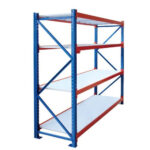
Racking systems are the backbone of any warehouse, manufacturing plant, retail store, or storage facility. They determine how efficiently space is used, how safe goods are kept, and how quickly staff can retrieve inventory. Among the most commonly used types are Heavy Duty Racks and Light Duty Racks. While they may appear similar at first glance, the two serve very different purposes and are designed for different load requirements and environments.
Understanding their differences helps businesses make informed decisions that improve productivity, optimize space, and enhance safety. Below is a comprehensive look at how Heavy Duty Racks and Light Duty Racks compare in terms of design, structure, applications, cost, advantages, and selection considerations.
1. Load Capacity and Structural Strength
Heavy Duty Racks
As the name suggests, Heavy Duty Racks are engineered to handle significantly higher weight loads. These systems are fabricated from thicker steel profiles, reinforced beams, and durable uprights that can support loads ranging from 500 kg to several tonnes per level.
They are ideal for industrial environments where products, raw materials, and equipment require robust storage solutions.
Heavy Duty Racks are designed to remain stable even in high-traffic warehouses, equipment-handling spaces, and bulk storage areas.
Light Duty Racks
Light Duty Racks are meant for lighter, more organized storage, typically supporting 50 kg to 250 kg per shelf depending on the design.
They are built using thinner gauge steel and simple bolt-less or bolt-together assemblies, offering convenience rather than brute strength.
These racks are perfect for small retail shops, offices, home storage, spare part rooms, and areas where fast access and versatility matter more than load-bearing strength.
Summary:
-
Heavy Duty → High-weight industrial loads
-
Light Duty → Lighter, everyday storage applications
2. Design and Construction Features
Heavy Duty Rack Features
-
Thicker steel channels & structural beams
-
Strong welded or bolted frame connections
-
Powder-coated or galvanized finish for durability
-
Multi-level structural support
-
Forklift-friendly access for palletized goods
-
Engineered to withstand industrial wear-and-tear
Most Heavy Duty Racks include options such as pallet racking, long-span shelving, mezzanine systems, and cantilever racks.
Light Duty Rack Features
-
Slimmer vertical uprights
-
Simple shelf panels (steel, MDF, or wire mesh)
-
Easy hand-load access
-
Boltless or lightweight bolted systems
-
Quick assembly and adjustability
Light Duty Racks focus more on convenience, aesthetics, and flexibility rather than industrial toughness.
3. Applications and Suitable Environments
Best Uses for Heavy Duty Racks
-
Warehouses and distribution centers
-
Manufacturing plants
-
Automotive parts storage
-
Bulk inventory storage
-
Palletized goods
-
Large hardware, machinery, or drums
-
Cold storage facilities
They are especially useful where forklifts or stackers load and unload items regularly.
Best Uses for Light Duty Racks
-
Shops and supermarkets
-
Offices & record rooms
-
Workshops & garages
-
Household storage
-
Spare parts and small tools
-
Medical and laboratory storage
Light Duty Racks are ideal where hand-picked inventory is common.
4. Space Utilization and Layout Flexibility
Heavy Duty Racks
These systems are designed to maximize vertical space and warehouse height. They can be configured into:
-
very tall bays
-
wide span systems
-
mezzanine floors
-
high-capacity pallet racking systems
While they are highly customizable, heavy duty systems require professional installation and proper load-distribution planning.
Light Duty Racks
Light Duty Racks offer more flexibility for small spaces. They can be:
-
easily reconfigured
-
adjusted without special tools
-
relocated without affecting structural integrity
Their simplicity makes them common in growing businesses that frequently reorganize inventory layouts.
5. Safety Considerations
Heavy Duty
Because of the high loads involved, heavy-duty systems include:
-
beam locking mechanisms
-
anti-collapse mesh
-
floor anchoring
-
safety load limit signage
-
seismic or wind-load considerations for some facilities
Professional installation is recommended to ensure safety.
Light Duty
These systems carry lower safety risks but still require appropriate anchoring when loaded near their maximum capacity. Overloading light-duty racks is the most common cause of failure and should be avoided.
6. Cost Differences
Heavy Duty Racks
They cost more due to:
-
stronger materials
-
reinforced designs
-
industrial-grade finishes
-
high load requirements
However, they offer long-term durability and are ideal for facilities scaling their operations.
Light Duty Racks
More affordable and easier to install, making them attractive for:
-
small businesses
-
homes
-
offices
-
retail storage
Their lower cost makes them ideal for non-industrial use but they are not suitable for heavy loads.
7. Which One Should You Choose?
When deciding between Heavy Duty and Light Duty Racks, consider:
-
Weight of stored items
-
Frequency of access
-
Storage environment (industrial vs. retail/office)
-
Budget
-
Space limitations
-
Future expansion plans
If you store bulk goods, heavy materials, or palletized stock, Heavy Duty Racks are the best choice.
If your needs revolve around light inventory, retail items, or small components, Light Duty Racks offer ideal convenience and affordability.
Final Verdict
Heavy Duty Racks and Light Duty Racks each serve unique purposes. Understanding their differences ensures you select a system that supports safety, space optimization, and long-term value. For any business aiming to improve warehouse efficiency or retail organization, choosing the right rack type is a crucial decision that directly impacts performance.